
Dry Rot Repair
During many of our stucco and leak repairs, we discover dry rot in the home’s framing. As a licensed General Contractor, HomePRO repairs the rot completely — and just as importantly, corrects the moisture problem that caused it so it does not come back.





What is dry rot repair?
Dry rot repair is the removal and replacement of wood that has been decayed by wood-destroying fungus, which develops when framing, sheathing, fascia, or trim stays damp. Proper repair removes all affected wood, corrects the moisture source, and restores structural integrity.
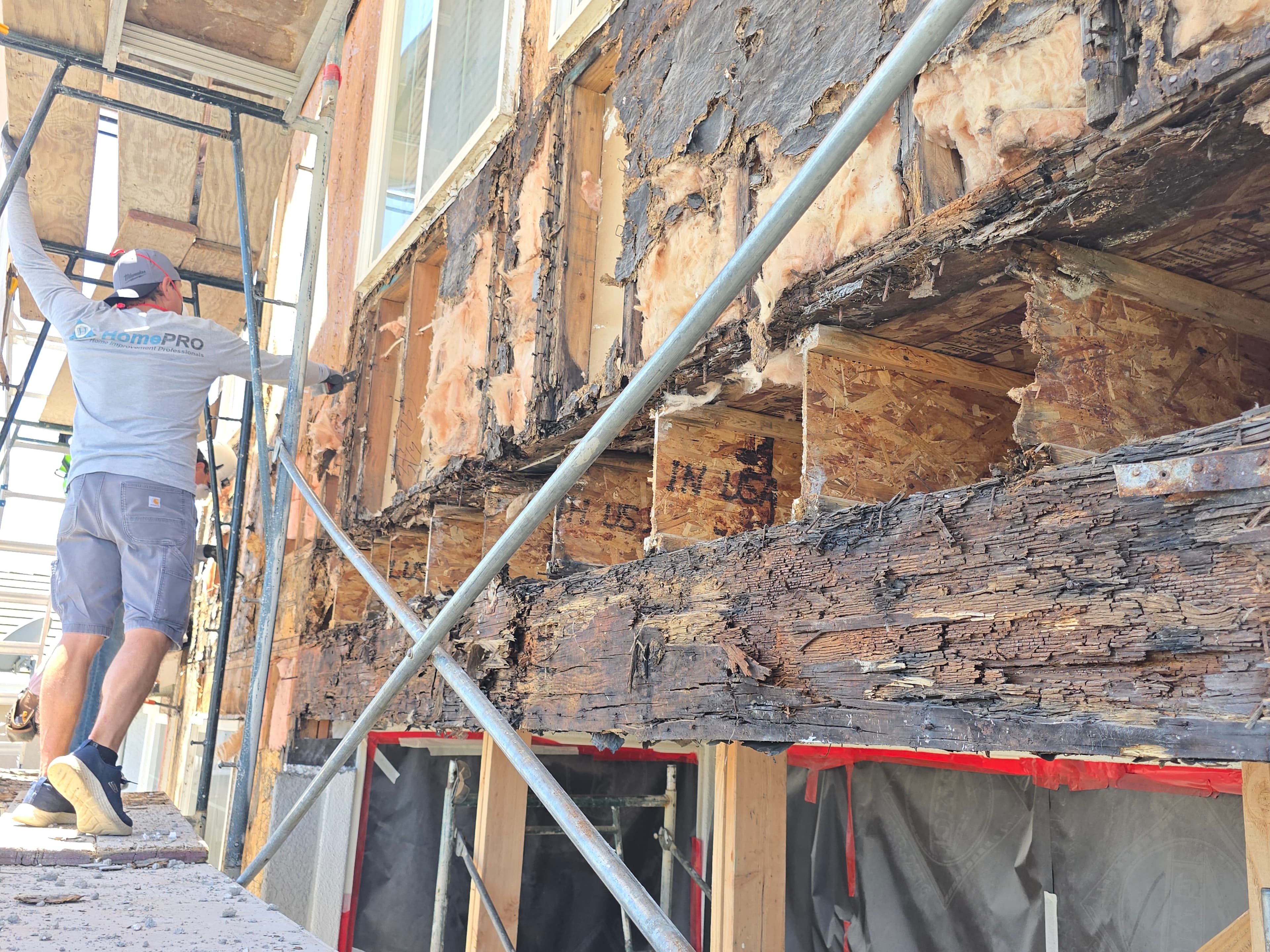
Dry Rot Repair project work by HomePRO.
View the project galleryWarning signs to watch for
- Wood that is soft, crumbly, or breaks off in cube-shaped pieces
- Darkened, shrunken, or cracked fascia boards and trim
- Paint that keeps peeling in the same spot
- A damp, musty smell in walls or under eaves
- Visible fungal growth — white, gray, or rust-colored patches
- Window sills or door jambs that feel spongy
Common causes we find
- Water intrusion behind stucco left unrepaired
- Failed flashing at windows, doors, and rooflines
- Gutter overflow and roof leaks wetting fascia and eaves
- Sprinklers repeatedly wetting siding and trim
- Wood in contact with soil or standing moisture
How we do it right
- 1
Find the full extent
Dry rot hides. We probe beyond the visible damage to find every affected member — framing, sheathing, sills, headers, fascia — before quoting the repair.
- 2
Fix the moisture source
Replacing rotted wood without fixing the leak guarantees a repeat failure. We correct the flashing, paper, or drainage issue first.
- 3
Structural repair
All decayed wood is removed and replaced with sound material, properly flashed and integrated with the wall system.
- 4
Restore the exterior
We rebuild the stucco or trim over the repair with matching texture and profile, leaving no sign the damage was ever there.
Why homeowners choose HomePRO
- Licensed General Contractor — structural repairs done legally and right
- We repair the cause (the leak), not just the rot
- One company for demolition, framing, flashing, stucco, and finish
- Thousands of Sacramento area repairs since 1996
Dry Rot Repair questions, answered
Is dry rot dangerous to my home?
Yes. Dry rot is a structural problem, not a cosmetic one. The fungus consumes the wood fibers that give framing its strength. Left alone, it spreads to adjacent wood and can compromise load-bearing members.
Can dry rot be treated without replacing the wood?
Minor surface decay can sometimes be treated with borate preservatives, but wood that has lost structural integrity must be removed and replaced. Treating over failed wood hides a problem that keeps growing.
Why do you insist on fixing the leak first?
Dry rot fungus needs moisture to live. If the water source remains, new wood rots just like the old wood did. Fixing the flashing or paper failure first is the only permanent repair.
Does dry rot mean I have termites too?
Not necessarily, but damp, decayed wood attracts termites and other pests. We frequently find both together, and as a General Contractor we can repair the structural damage either way.
Have a leak or stucco issue? Let a PRO take a look.
Get a free, no-obligation consultation. We’ll diagnose the real problem and give you an honest estimate.
CSLB #722686BBB A+Since 1996